The colleges of Oxford - Part 2

In part 1, we covered all the colleges still in existence that were created before the Tudor era, as well as some that were founded during it. We now carry on from where we left off.
To restate the introduction to part 1, I make zero claims about the accuracy of what is written here, the depth of the research is the Wiki page.
Trinity
Trinity is the other half of the Balliol-Trinity rivalry. The wittiest of the pranks inflicted in this century-long war was committed by Trinity:
In October 1985, the new intake of Balliol students each received a letter containing a narrow-necked 100ml screw-top receptacle. The letter read, "Dear [X], Welcome to Balliol. As you are aware, the university requires a short medical check-up as part of your Coming-Up. Could you, therefore, please provide a urine sample in the attached sample bottle and return it to your college tutor's office by no later than 5.00 PM on Wednesday."
The letters were sent out on that Wednesday evening. Balliol admitted to some 57 being returned. The incident was subsequently reported in the Daily Express under the headline, "Students play wee joke on neighbours". The incident concluded with the unfurling of a banner over Balliol reading, "We are Balliol. Please Don't Take The Piss!"
St John’s
This is the richest of all the colleges. It owns a bunch of land that was developed and is still the landlord. The Lamb and Flag pub is famously owned (and until very recently operated) by the college.
Tony Blair did his undergrad here.
Jesus
Jesus is the only college to date to the reign of Elizabeth I. It is known as the Welsh college and, for a time, had many stipends available only to students from particular parts of Wales. This is no longer the case but the college's undergraduate gossip sheet is entitled The Sheepshagger, a reference to an offensive joke about Welsh people.
Lawrence of Arabia went here.
Wadham
The Wadham Wiki page very helpfully cuts to the chase and gives us a section called Anecdotes and Curiosities. This is what we’re here for! Below are some highlights:
- Under the original statutes, women were forbidden from entering the college, with the exception of a laundress who was to be of 'such age, condition, and reputation as to be above suspicion.'
- In 1739 the warden of Wadham, Robert Thistlethwayte, fled England after a homosexual scandal. The event prompted the limerick:
There once was a Warden of Wadham. Who approved of the folkways of Sodom, For a man might, he said, Have a very poor head But be a fine Fellow at bottom.
- In 1968, as student protests became commonplace at centres of learning in Europe and the Americas, the Warden and Fellows are reported to have sent this reply to a set of "non-negotiable demands" Dear Gentlemen: We note your threat to take what you call 'direct action' unless your demands are immediately met. We feel it is only sporting to remind you that our governing body includes three experts in chemical warfare, two ex-commandos skilled with dynamite and torturing prisoners, four qualified marksmen in both small arms and rifles, two ex-artillerymen, one holder of the Victoria Cross, four karate experts and a chaplain. The governing body has authorized me to tell you that we look forward with confidence to what you call a 'confrontation,' and I may say, with anticipation. The letter seemed to have dimmed the students' fire.
Sir Christopher Wren of St Paul’s Cathedral went here. So did the physicist Roger Penrose.
Pembroke
In 2002, two fellows here resigned after they accepted a bribe to admit the fictional child of an undercover reporter. The autocratic leader of Hungary, Viktor Orbán, went here, so maybe he learnt a thing or two from those fellows.
Pete Buttigieg, a rising star in the American Democratic Party, was a Rhodes Scholar here.
Worcester
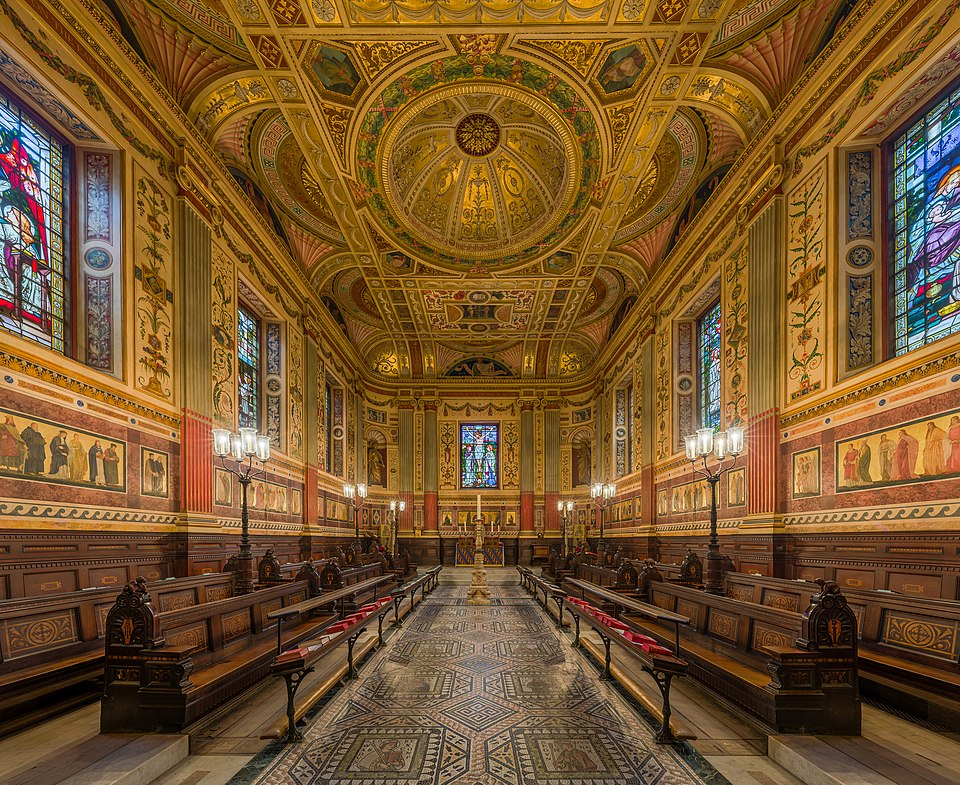
Worcester has an unusually decorative and beautiful chapel (pictured).
The media tycoon Rupert Murdoch studied PPE here, other alumni are Emma Watson and the show runner through much of the best of Dr Who, Russell T Davies.
Keble
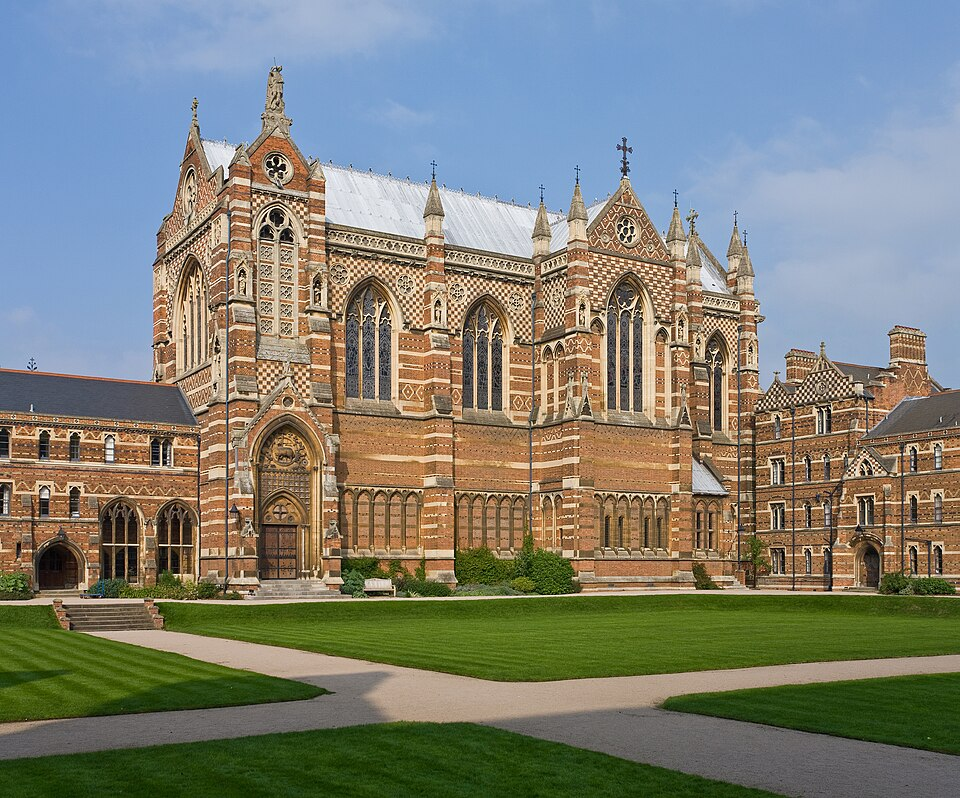
This college was built of red, blue, and white bricks in the 1870s (pictured) and stood out quite a bit at the time. Sir Kenneth Clark recalled that during his Oxford years, it was generally believed that Keble College was "the ugliest building in the world". Undergraduates at St John's College started the Destroy Keble Society, which aimed to dismantle the college brick by brick.
Lady Margaret Hall, Sommerville, St Hugh’s, St Hilda’s, St Anne’s
The interesting thing these colleges share is that they were all the first women's colleges in Oxford. Depending on how you count, LMH was the first of these, but they were all established within 20 years of each other in the latter half of the 1800s. Before 1920, the university would not recognise women as full members of the university. They could go to lectures, take exams, but wouldn’t be given a degree.
Some tidbits I found were that LMH is the only college to offer a foundation year, and alumni include Nigella Lawson and the peace prize winner Malala Yousafzai. Margaret Thatcher went to Sommerville. Teresa May went to St. Hugh's. St Hilda’s was the last of the women’s colleges to admit men, doing so in 2008. Finally St Anne’s doesn’t have a chapel, and its college mascot is a Beaver, which, like the Corpus Christi Pelican from part 1, is a theme in the college.
St Peter’s, St Catherine's, Nuffield College
St. Peter's had the nickname “Pot hall”, Wikipedia doesn’t elaborate. Mark Carney, the Prime Minister of Canada, went there.
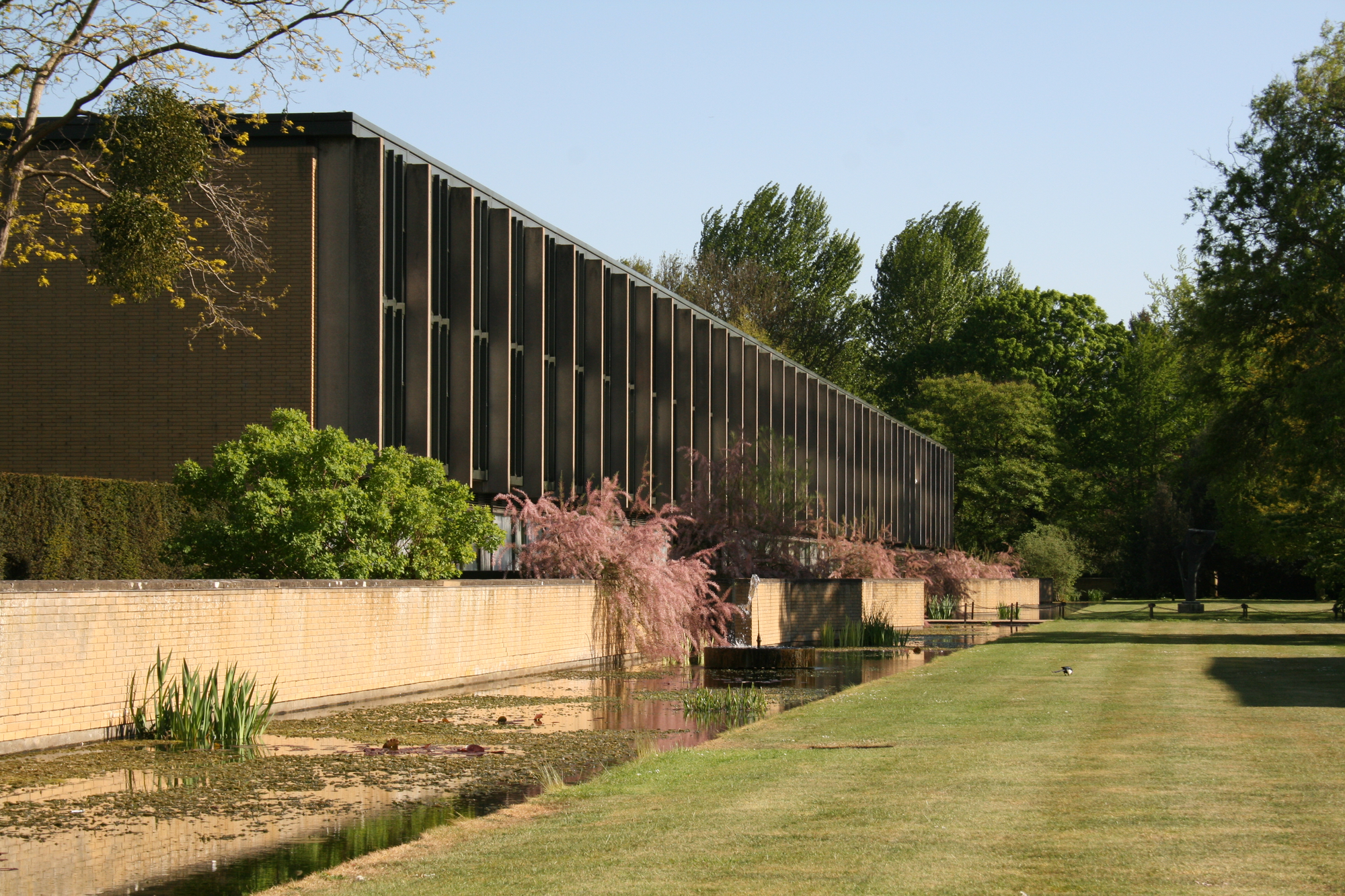
Catz was designed by one guy, Arne Jacobsen. “Jacobsen designed everything, including the furniture, cutlery, lampshades, and the college gardens, down to the choice of fish species for the pond.” Years ago, when I had just arrived at Oxford and had just started running, I got lost and ended up in the grounds of Catz. It's very modern (pictured), which heightened my disorientation having just come from the ancient limestone buildings.
Nuffield was the first Oxford college to accept both men and women. It was also the first exclusively graduate college at either Oxford or Cambridge.
Regents
This is a college that was drawn into Oxford like dust to a motherboard. It was located in Regent’s Park, London, from which it’s name, before floating into Oxford in 1927. Part of the appeal of the move was that neither of the ancient universities had Baptist representation.
When it first arrived in Oxford, a Latin grace was composed for use in Hall. This was quickly put to a stop by the principal, whose principles led him to dunk those who spoke a Roman grace in a bath of cold water. A true Baptist.
Harris Manchester College
This college is another that kind of floated around for a while before landing in Oxford. It was established in Manchester in 1757, moved to York, then to London, and finally to Oxford in 1889. It is the smallest undergraduate college in either Oxbridge universities.
HMC was requisitioned by Naval Intelligence during WWII. The section housed there played a role in planning Operation Overlord (the one where the Allies struck back).
Mansfield
Another college that was drawn in over time from elsewhere in the country. Manchester again, in fact. It was the first nonconformist college in Oxford, meaning a college that is still Protestant, just not specifically Church of England Protestant. Which, at some point, was presumably a big deal.
Today, Mansfield is known for its emphasis on equality, with over 90% of the students from state schools.
St Antony’s
At this point in the blog, the colleges are modern, St Antony’s was founded in 1950. However, it has quite a mysterious air to it. It was established with an emphasis on regional studies and became the place to study the Soviet Union at Oxford. This gave it a reputation for being a spy college:
St Antony’s in Oxford was notorious in both the British and Soviet press as a “spy college”.
I found this little article by a student who went on an exchange to Moscow during the Cold War oddly nostalgic for a time I wasn’t even born in. Link
Linacre
This is my college. It is known for the biggest bop (college party) in Oxford, the matriculation bop “sexy sub-fusc” and for some recent drama about its name being changed:
In 2021, the college signed a memorandum with SOVICO Group to receive £155 million. It stipulated that after the first £50 million, the College would change its name to Thao College. The UK government announced an investigation into this memorandum in 2022, and I have heard nothing about this since.
St Cross
One of the poorest colleges in Oxford. Only £25 million to its name. Technically, it’s also only renting the land it is on with a 999-year lease from Pusey House. I guess they just thought it would be funny to have a lease that long.
Wolfson
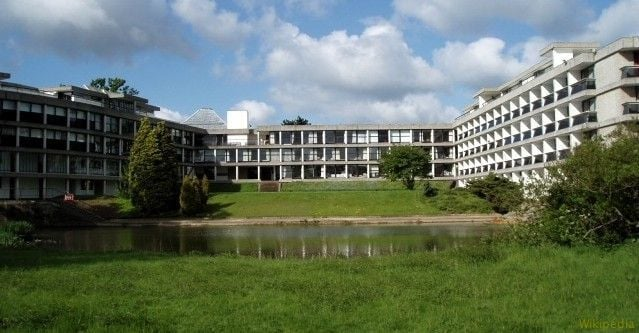
I’ve been here quite a few times because they have the Linacre punt. Wolfson gives off the vibes of a 60s hotel. I like it, it’s stylish, and the space is interesting to move around in.
The cofounder of LinkedIn went here.
Kellogg College
Kellogg says grace in Welsh. It is the only college in Oxbridge to do so.
Yes, that is the same Kellogg as the Kellogg's cereal brand. It was their money that established it.
Green Templeton College
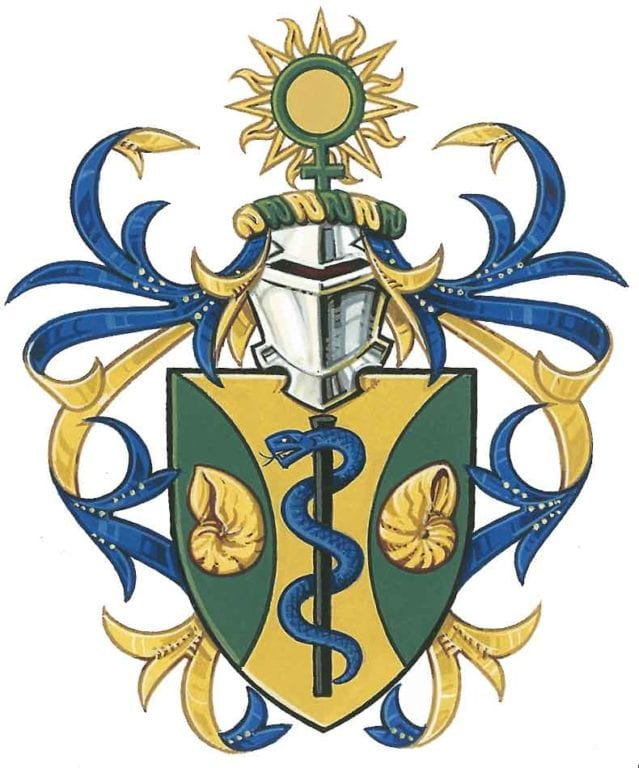
GTC was formed by the merger of Green College (founded 1979) and Templeton College (founded 1965). It is centred around the Radcliffe Observatory, one of the earliest purpose-built observatories in Britain, completed in 1773.
The full crest (pictured) features a knight's helm atop the shield with a heraldic Sun behind the astronomical device for Venus (♀), since it was the transit of Venus across the Sun in 1761 which prompted the foundation of the Observatory. A very cool crest in my opinion.
Reuben
The baby of the bunch. Reuben was founded in 2019. It feels like my baby brother because it was in Linacre until they could get their own site. I don’t remember when they moved out, and the Wiki page doesn't either, but for the first couple of years of my PhD I remember the bottom part of Linacre being given over to them. They are pretty focused on AI, it always seems like the Reuben people work with AI to some capacity.
And that’s it. Well, there are rumours of a new college, called Radcliffe College, being established near John Radcliffe Hospital. So this article could already be out of date.
An Anki deck to remember where the colleges are and their crests can be downloaded on the Anki website.


Comments ()