The colleges of Oxford - Part 1

I have now been at Oxford for quite a while but I must confess to not having been a very good tour guide. I knew next to nothing about the colleges other than the few I had personal experience with. So, I decided to open up each of their Wiki pages and have a look for anything interesting. When I have little on a college I will merge entries. I make zero claims about the accuracy of what is written here, the depth of the research is the Wiki page. The entries are roughly from oldest to youngest. Because there are 39 colleges, this post will be split into two parts.
Why are there colleges?
Colleges exist because Oxford University came into existence through the gradual accretion of institutions. Between the 1100s and 1400s there were dozens of monastic halls that housed and taught students, none of which still remain. The colleges started life in the mid 1200s as institutions for graduate students, but then they began admitting undergraduates for a fee and gradually came to dominate.
Oxford does have a gravitational quality to it. We'll see that institutions continue to be drawn into its orbit. And not just institutions, Oxford is a convergence point in the lives of such a vast array of interesting people that it boggles the mind.
What do colleges do?
Colleges are basically halls of residence, cafeterias, places to socialise and semi-private tutoring all rolled into one for undergraduates. The students still go to lectures in big lecture halls in whichever department they are part of and will still receive a degree from the University of Oxford, regardless of which college they were part of.
University College
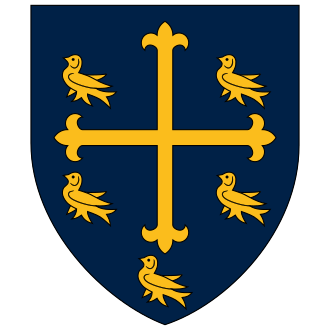
University College, affectionately known as Univ, is the oldest college in Oxford (depending on how you count), having been founded in 1249. This makes it an auspicious 777 years old at the time of writing. According to myth, it was founded by King Alfred! The only “Great” we have in the English line. The college shares his coat of arms (pictured below).
Univ has the longest grace of any college. Apparently, those listening to the grace have to respond five times in Latin before they can eat.
Stephen Hawking went here for undergrad, Bill Clinton also popped up here as a Rhodes Scholar.
Balliol
Balliol also has a claim to be the oldest Oxford college. It was the first “house of scholars” to be established in 1263, something like a proto-college. (Merton was the first proper college with a clear statute, and University College was the first informal grouping of funded scholars.)
Balliol has a rivalry with Trinity, with the tradition of chanting offensive songs known as “Gordouli” over the wall at their neighbours. The wittiest of the raids between the two colleges belongs to Trinity, whose entry you should look forward to in Part 2.
After going to Eton, Boris Johnson went here. He was also president of the Oxford Union when he was here.
Merton
Merton is the oldest college (if we measure it by when the college first received a statute, which was 1264 for Merton). It is also the highest-ranked college academically over the past 20 years. And, it was the only college to side with Parliament during the Civil War.
Merton has a fun tradition called the “Time Ceremony”. It’s a spoof of other Oxford traditions. In the Time Ceremony, students walk backwards around the Quad while drinking as the clocks go back to “preserve the space-time continuum”. They raise the fantastic toast “long live the counter-revolution” as they do so.
Sir Andrew Wiles, who proved Fermat’s Last Theorem, did his undergrad here.
St Edmonds Hall (Teddy Hall) and Exeter
Teddy Hall is deeply connected to Lollardism, which was essentially protestantism before protestantism in England. It also counts Kier Starmer among its alumni, who did a postgrad law course there in the 80s.
JRR Tolkien did his undergrad at Exeter. Apart from that, I didn’t find the page that interesting. Sorry Exeter.
Hertford
Hertford had a bumpy ride. First it was Hart Hall in the 1280s. This became a college in 1740 but was dissolved in 1816. In 1820, Magdalen Hall took over the site (established 1490). In 1874 Magdalen Hall became a college and was given the name Hertford.
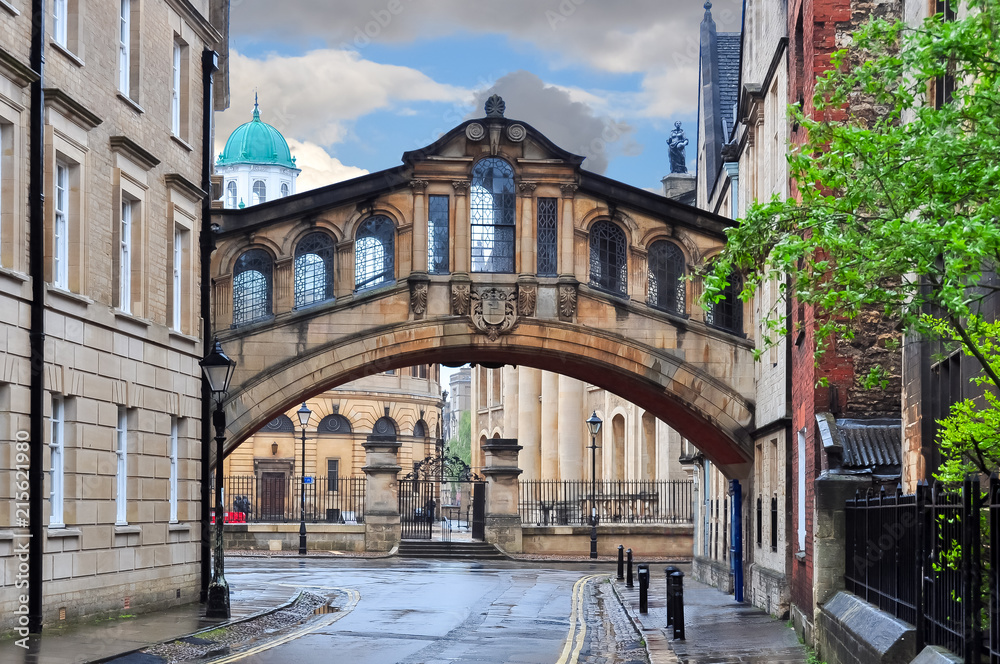
A tourist favourite, The Bridge of Sighs (pictured) was added in 1913 to connect two buildings in the Hertford campus. I've walked across the bridge once, it's regularly used by Hertford students. Despite the name being the same as that of the famous bridge in Venice, a quick Google image search of the namesake bridge reveals ours is not a recreation.
Oriel
Oriel was the last of Oxford's men's colleges to admit women, doing so in 1985. They also have a statue of Cecil Rhodes right in the middle of the front of their building on the High Street. At least put him in the gardens.
Sir Walter Raleigh, the guy who is supposed to have introduced the English to the potato and tobacco (two bedrocks of the country), studied for an undergraduate degree here but never graduated.
Queen’s
Queen’s was founded by the chaplain of queen consort Philippa of Hainault (the Queen in Queen’s). This was back in the mid 1300s, so Philippa acted as regent for a few years while her husband was away perpetrating the Hundred Years’ War.
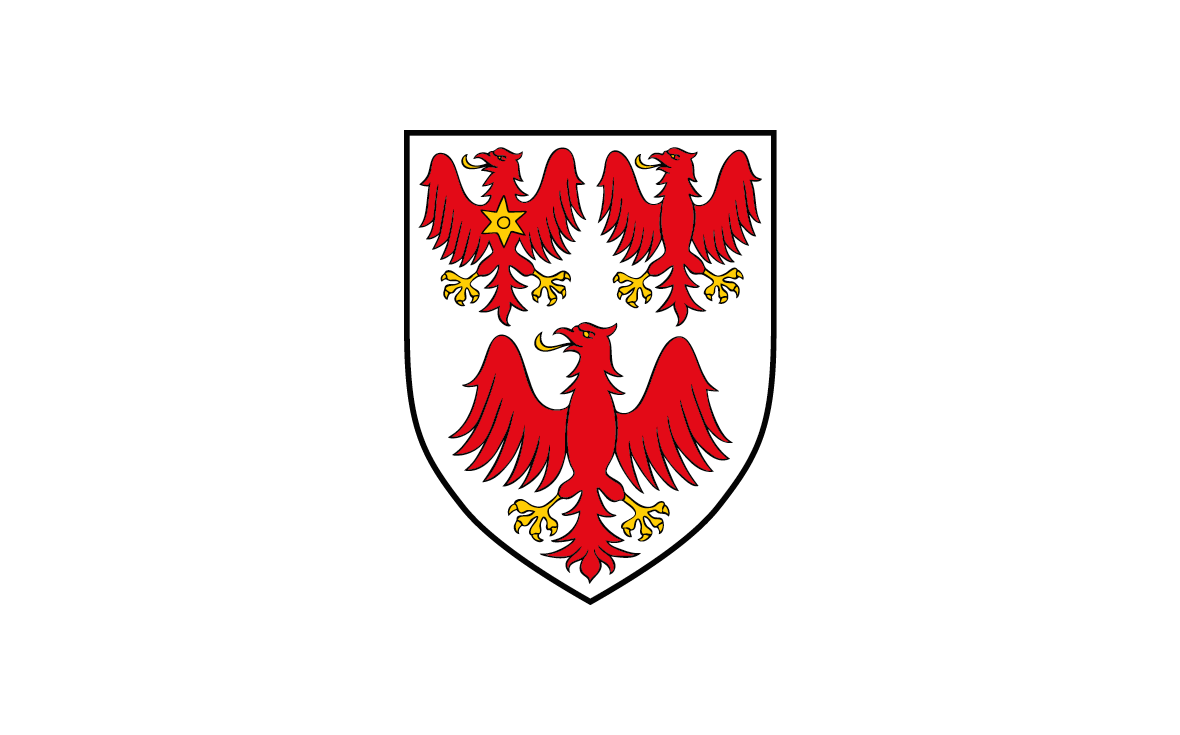
The chaplain’s family crest (pictured) did not include the little star on the breast of the first eagle. It was added since, as the little brother, he wasn’t allowed to use the family arms. Poor little brothers.
Queen’s has an impressive alumni list. One of my favourite actors, Rowan Atkinson, briefly pursued a PhD here, leaving with a master's after deciding to devote himself to acting. In addition, they boast Henry the Fifth of the Battle of Agincourt, Tim Berners-Lee of the internet, Edmond Halley of the comet, and Edwin Hubble of the discovery that there are other galaxies than the one we are in!
New College
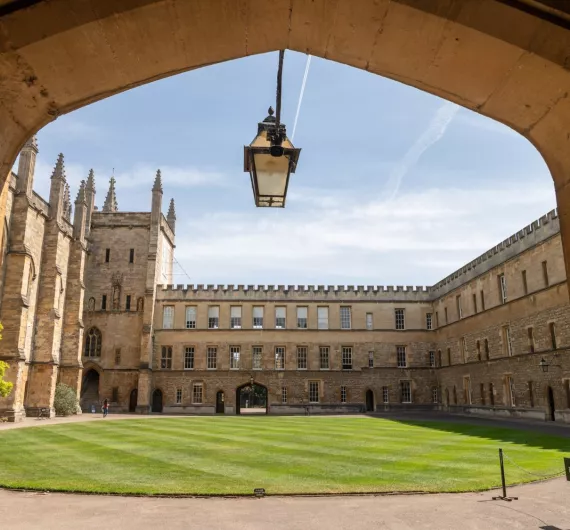
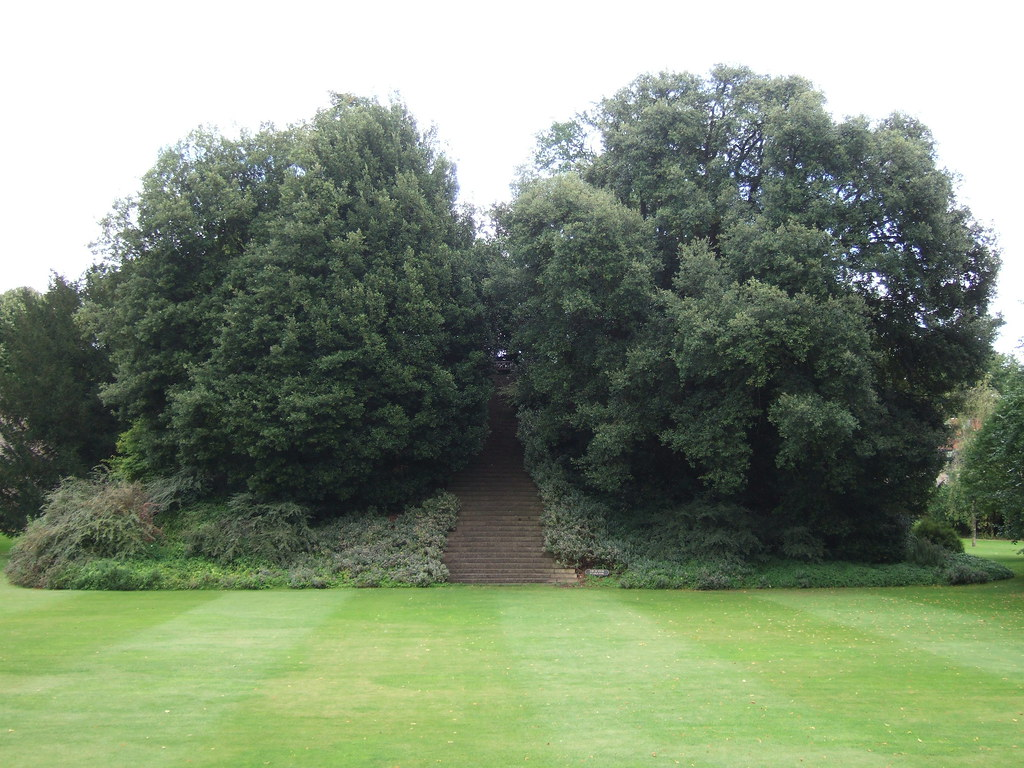
This is a pretty one (pictured 1). They have a mound in their gardens (pictured 2), which I found pretty intriguing when I happened to be there. I thought it might be some kind of ruin, but it turns out it’s just a mound from the early 1600s that they thought would make a nice garden feature.
The college also has a cool motto, “Manner Makyth Man”.
Brasenose
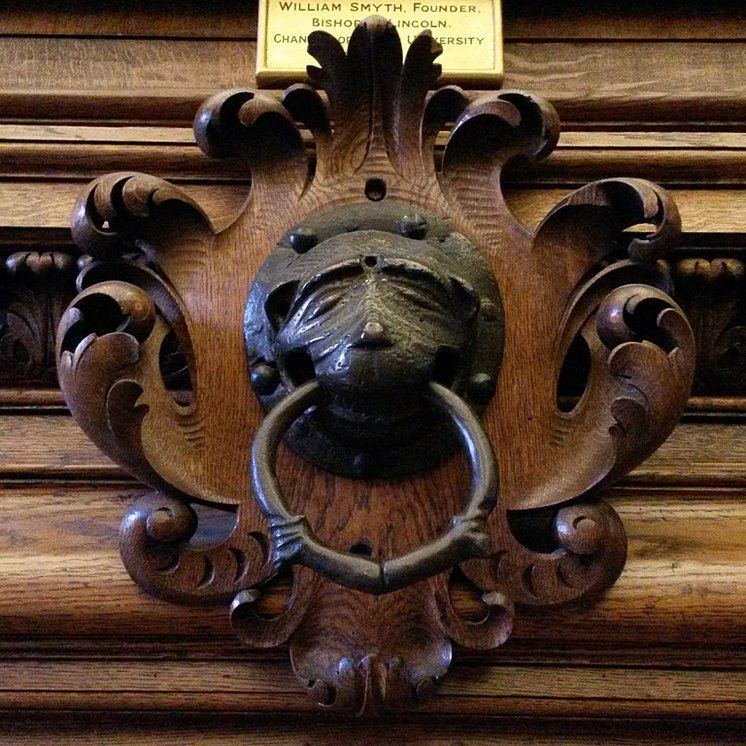
Literally “Brass-Nose” after a bronze knocker that used to be on the hall’s door (pictured), with what looks more like a big snout than a nose.
Brasenose has a rivalry with Lincoln College. Its neighbour, to which it is linked by a door. According to legend, a mob once chased students through the town. The Lincoln porter only allowed the Lincoln men through, leaving a Brasenose student to die at the hands of the mob. To honour the fallen man, the door is opened once a year for five minutes, and Brasenose students are served ale by Lincoln. The ale is flavoured with ground ivy to discourage excessive consumption.
Alumni include David Cameron, Michael Palin of Monty Python and William Webb Ellis who invented Rugby,
Lincoln
Dr Suess dropped out of a doctorate here. Maybe he was put off by the Goblin Club, an exclusive all-male dining society banned in 2019 on the grounds of being elitist and racist.
The college grace is read aloud in Latin every formal. To encourage students, if you do it twice in a term, you get a bottle of wine. Lincoln is the other half of the Brasenose rivalry above, so hopefully the wine isn’t flavoured with ivy too.
Rishi Sunak went here.
All Souls
Most of these colleges have long-winded real names which we have been ignoring, such as "The Principal and Scholars of the King's Hall and College of Brasenose in Oxford" for Brasenose, but while most just seem superfluous, All Souls’ is actually quite cool. The true name is The College of All Souls of the Faithful Departed of Oxford.
All Souls admits no undergraduate students. Within three years of completing an undergraduate or master's degree, individuals can apply for a “prize fellowship” here. This entails an exam once called the “hardest in the world” for room and board in Oxford for 7 years to study whatever one wishes.
Every hundred years, there is a feast, after which fellows parade around the college with flaming torches singing the Mallard song, led by a “Lord Mallard” carried in a chair. They search for the legendary mallard that flew out of the college's foundations when it was being built. In past years, they followed a man who brandished a live mallard duck tied to a pole.
Magdalen
This is a big one. Magdalen, pronounced “maudlin”, is probably the richest college in Oxford. It owns the Oxford Science Park, an area south of the city with over 100 companies.
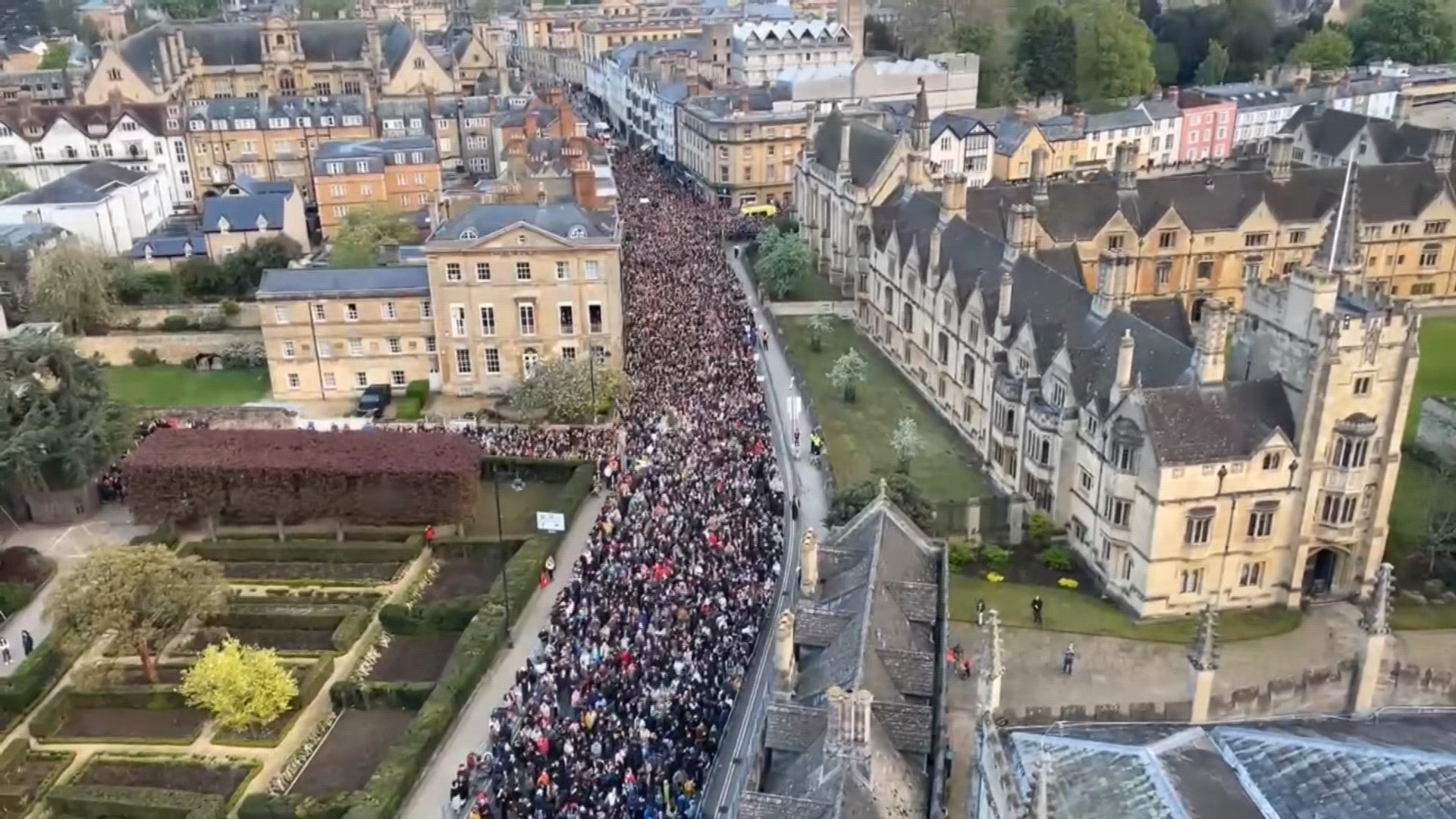
On May day the college choir sings from the top of its tower at 6 a.m. I’ve been once, it’s unbelievably packed (pictured).
The reason the name is like that is the college is so old language has shifted around it. It was named after Mary Magdalene, whose name in late medieval English was Maudelen.
Its alumni include Thomas Wolsey, the advisor to Henry the VIII who actually founded a college later in this list and Oscar Wilde.
Erwin Schrödinger came to be a fellow here after he left Nazi Germany. He brought both his wife and a second partner to live with, which was not met with acceptance. Don’t feel too bad for Schrödinger, the evidence suggests he was a paedophile who abused several of his students.
Corpus Christi
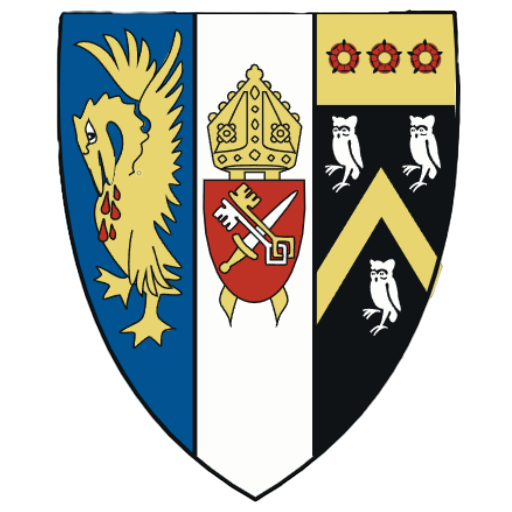
The Pelican in her Piety (pecking her own breast to draw blood to feed her chicks) is on the left in the coat of arms (pictured). Pelicans are a theme at the college.
Once a year, the college tortoise is raced against other Oxford tortoises at the “Tortoise Fair”.
Christ church
Christ church is intimately tied to the English Reformation. At the height of his power, Cardinal Thomas Wolsey founded Cardinal College at the site. He fell from grace after being incapable of attaining an annulment for Henry VIII's marriage. Among the Church's possessions, Henry seized the site. He established it as a college and cathedral of the new Diocese of Oxford.
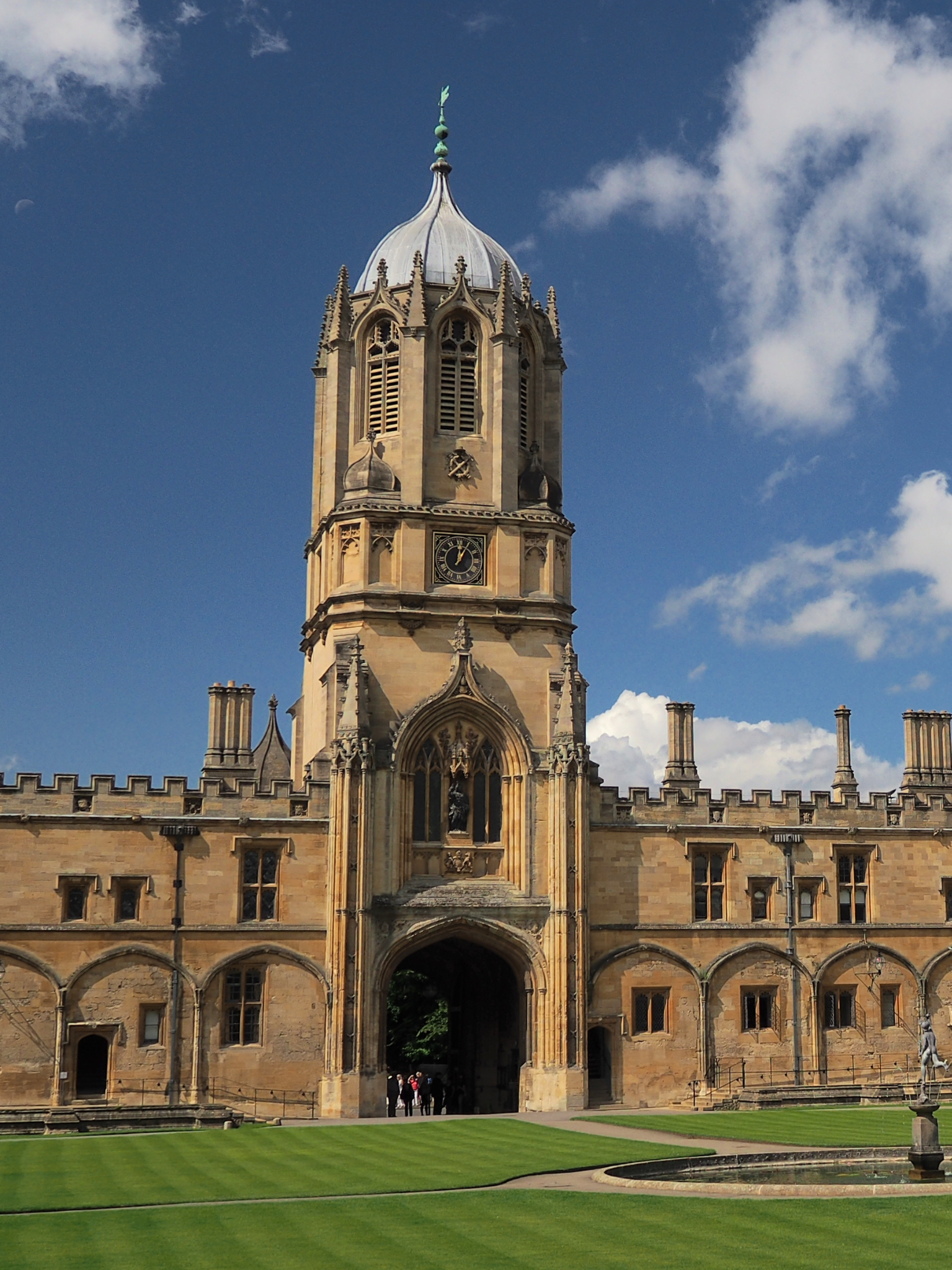
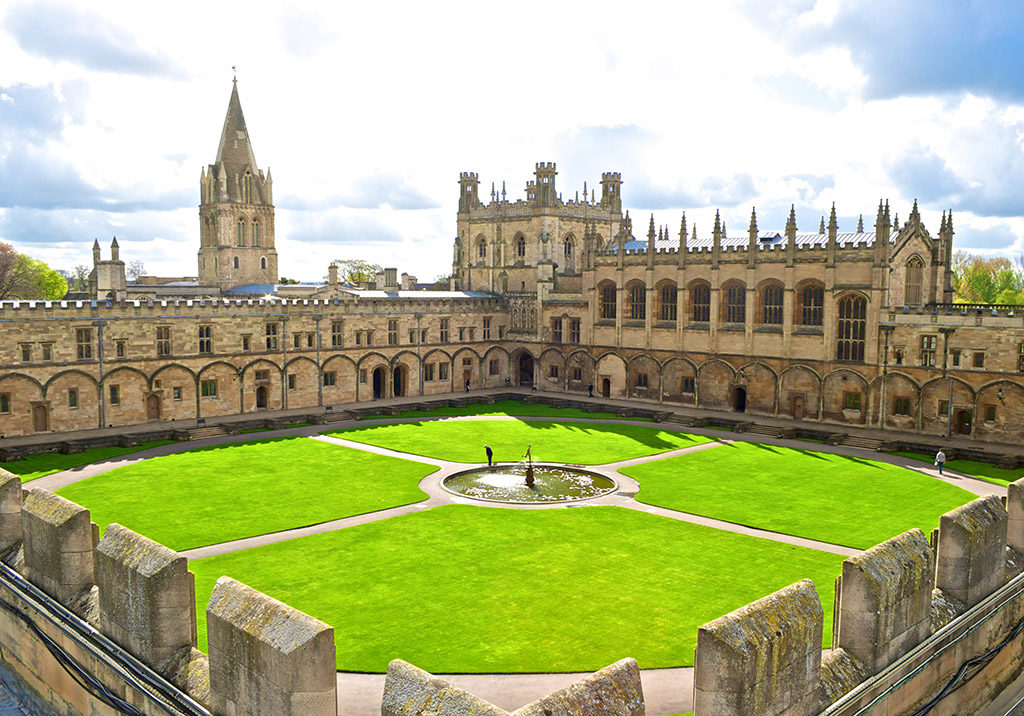
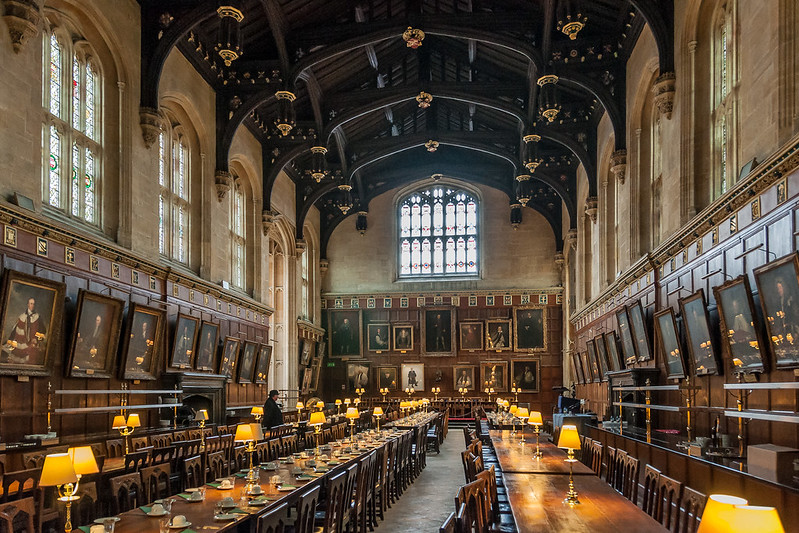
The college contains some impressive architecture, including Tom Tower (pictured), designed by Sir Christopher Wren, Tom Quad (the largest Oxford quadrangle, pictured) and the Great Dining Hall (also pictured). The latter was the seat of parliament assembled by Charles I during the English Civil War. The architecture has been featured in The Golden Compass and Harry Potter.
The college has 13 British prime ministers among its alumni, the most of any college. Lewis Carroll spent most of his life here, and so did John Locke, a man whose ideas were a big influence on the US Declaration of Independence. Robert Hooke of the law about springs went here.
While my favourite physicist, Albert Einstein, was in Oxford, he was at Christ Church. Here is a little anecdote I love from the author of Lord of the Flies from when he met the great man (this is reproduced from here: link).
Some time in 1931, the young Golding happened to be standing on a small bridge in Magdalen Deer Park looking at the river when a ‘tiny moustached and hatted figure’ joined him.
“Professor Einstein knew no English at that time, and I knew only two words of German. I beamed at him, trying wordlessly to convey by my bearing all the affection and respect that the English felt for him. “
For about five minutes the two stood side by side.
At last, said Golding, “With true greatness, Professor Einstein realized that any contact was better than none."
He pointed to a trout wavering in midstream. ‘Fisch’, he said.
Golding continues: Desperately I sought for some sign by which I might convey that I, too, revered pure reason.
I nodded vehemently.
In a brilliant flash I used up half my German vocabulary: ‘Fisch. Ja. Ja.’ I would have given my Greek and Latin and French and a good slice of my English for enough German to communicate. But we were divided; he was as inscrutable as my headmaster.
For another five minutes, the unknown undergraduate Englishman and the world-famous German scientist stood together.
Then Professor Einstein, his whole figure still conveying goodwill and amiability, drifted away out of sight.


Comments ()